
Understanding wrist pain
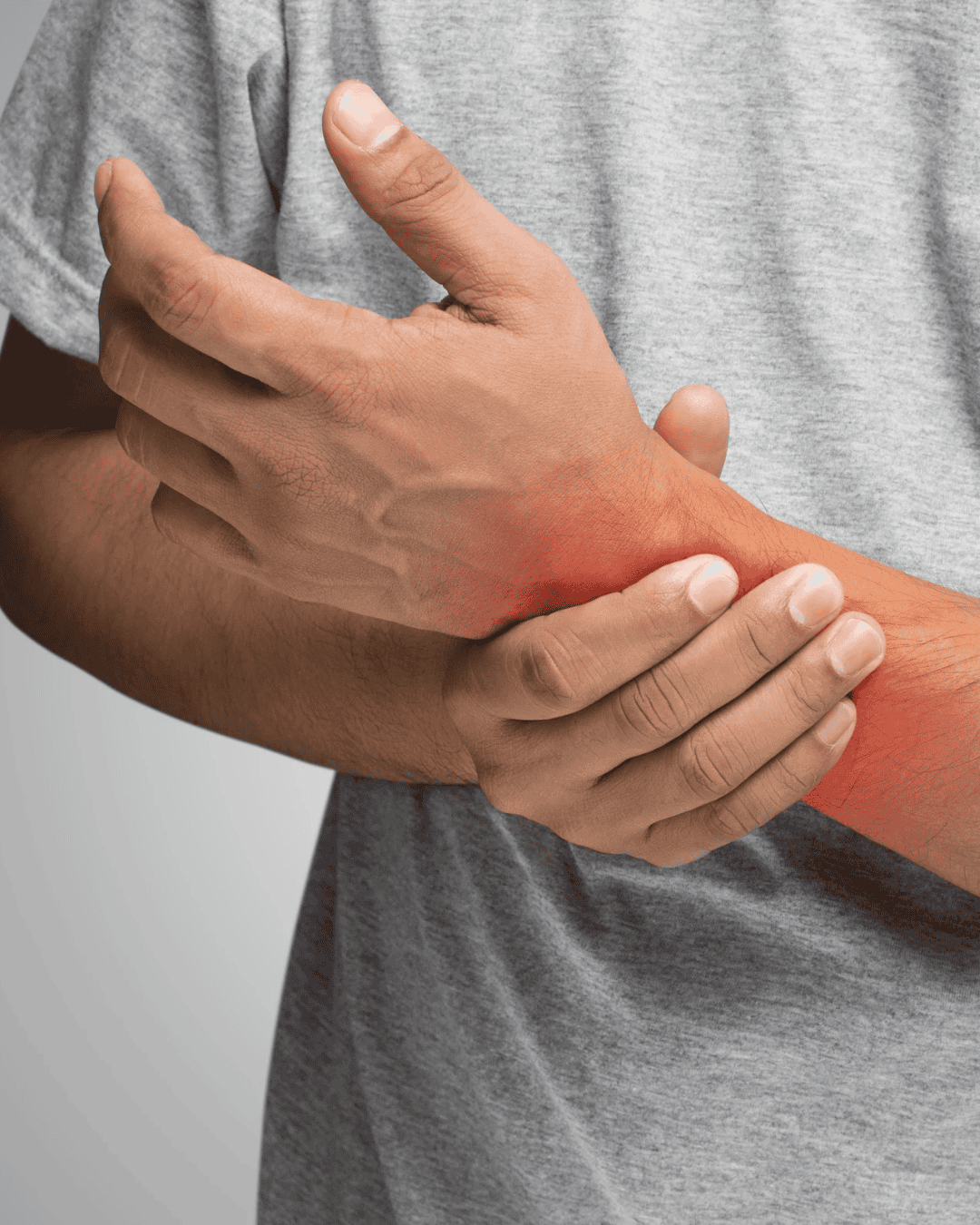
Wrist pain can follow a fall or develop gradually. It may be felt on either side of the wrist or extend into the hand or forearm, and sometimes comes with stiffness, swelling, tingling or a weaker grip. Possible causes include sprains, fractures and other conditions, so the location of pain alone does not identify the problem.
The activities that matter differ from person to person. You may notice discomfort lifting weights, opening a jar, using tools or working at a desk. Explaining which movements are difficult can help guide an assessment.
Wrist and hand symptoms sometimes start in the neck, which is why we also assess for disc injuries in the cervical spine.
When wrist pain needs medical attention
Seek urgent medical care if you have severe wrist pain, a wrist that looks deformed or is pale, sudden loss of strength, or pain after a serious injury. Seek prompt medical advice after an injury if you have numbness, weakness or difficulty moving your wrist, or if you suspect a fracture. A doctor can assess whether imaging or other care is needed.
If your wrist is red and hot or you have a fever, seek prompt medical advice. Osteopathic care should not delay medical assessment when these signs are present.
If your wrist pain came from tennis, golf or gym training, sports injury rehabilitation can help you return to activity safely.
What happens at an osteopathic appointment?
Dr Austin will ask about your symptoms, any injury, your health history and the tasks you want to do more comfortably. Your assessment may include looking at movement and sensitivity in the wrist and hand, as well as other areas relevant to your symptoms. You can discuss existing diagnoses, treatment and any medical reports.
The findings help determine whether osteopathic care is suitable or if you need to see another health professional first. You can ask questions and discuss your preferences before any treatment.
Patients from nearby suburbs can see an osteopath in Edgecliff for wrist assessment and treatment.
An individual approach to care
When appropriate, care may include hands-on techniques, exercise and advice about modifying activities. The approach depends on the cause of your symptoms, your assessment and your goals. For example, a conversation about desk work may consider the tasks you repeat during the day, while a return to lifting may require different considerations.
Read about osteopathy or the clinic’s ergonomic assessment.
Book an appointment in Potts Point
Book Your Appointment:
Visit our website to book your appointment conveniently online. Take the first step towards a healthier, pain-free life with Osteopath Sydney.
Contact Information
For inquiries and appointments, contact our reception at 02 9356 0495. Your path to vitality and wellness begins with Osteopath Sydney.
Let us be your health partners, providing expert care to enhance your quality of life with osteopathy for tension headaches.